 Help
Help Between Flags and Feelings
I often think about how national events like the FIFA World Cup bring out both pride and pain for immigrants living in the UK. For many of us, football isn’t just a game it’s a mirror reflecting how we see ourselves, how others see us, and how belonging can sometimes feel conditional. National pride becomes emotional terrain, especially when your identity spans continents, cultures, and histories.
⚽ The Joy of Dual Identity
For immigrants, the World Cup is never just about football. It’s about identity, memory, and belonging. Many of us cheer for our countries of origin, but we also want to feel proud waving the English flag the flag of the country we now call home.
My own identity is layered. I’m the son of a Liberian father and a Guinean mother, both refugees who fled the Liberian civil war and escaped Charles Taylor’s regime through the United Nations refugee programme. Their journey took them to the Netherlands, where I was born. At age 11, I moved to Leeds, and England became the place where I grew up, found my voice, and built my future.
So when football season arrives, I feel pride for Liberia, Guinea, the Netherlands and England, each flag representing a chapter of my story. For many immigrants, this dual or even triple identity is empowering. It shows that belonging doesn’t have to be singular. You can love more than one country. You can celebrate more than one culture. You can carry more than one flag without contradiction.
But this joy also comes with tension. Some people don’t understand that identity can be fluid. They see multiple flags and assume divided loyalty, when in reality, it’s expanded loyalty.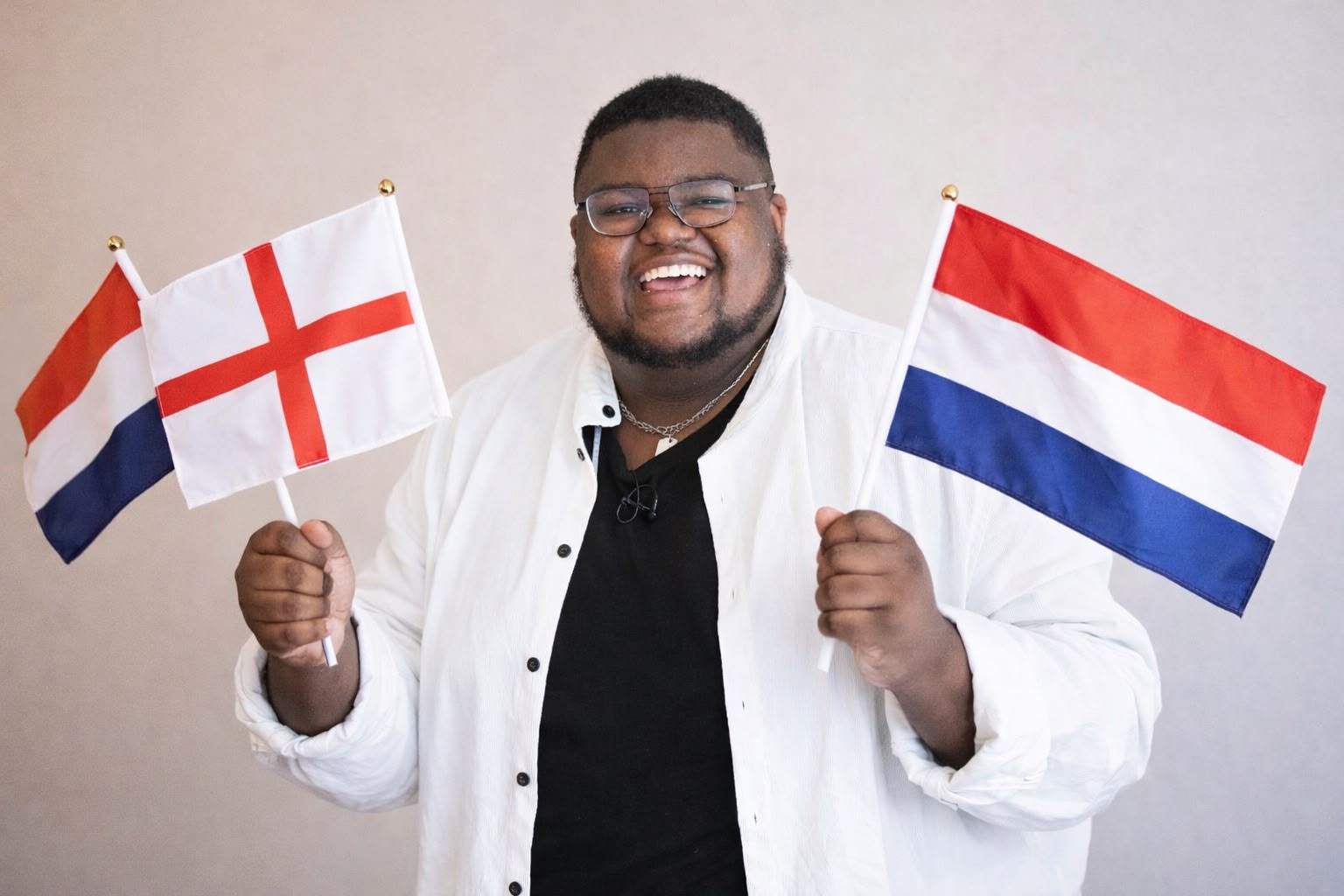
🇬🇧 The Struggle to Belong
Supporting England as an immigrant or person of colour can be complicated. There’s pride in seeing Black and POC players like Bukayo Saka, Marcus Rashford, Raheem Sterling, and Kobbie Mainoo represent the nation. They show that England’s strength comes from its diversity.
But there’s also fear – fear that if the team loses, the blame will fall unfairly on players of colour and, by extension, on fans who look like them.
After the Euro 2020 final, when Saka missed his penalty, the racial abuse that followed was heartbreaking. It reminded many of us that our belonging can feel conditional. I’ve heard jokes among friends’ half humour, half survival instinct that if England loses, we should avoid pubs or crowded spaces because the stares can feel heavy, as if we personally failed the nation.
This isn’t paranoia. It’s lived experience. It’s the quiet tension of wanting to belong but sensing that belonging can be revoked the moment a Black player misses a shot.
For immigrants, supporting England can feel like walking a tightrope: wanting to celebrate, but also bracing for the possibility of hostility.
🧠 Mental Health and the Fear of Going Out
These experiences don’t just affect identity they affect mental health. Many immigrant and POC football fans feel anxiety during major tournaments. Not because of the game itself, but because of how people might react to them. The fear of being stared at, judged, or blamed can make people avoid public spaces altogether.
Some fans skip pubs, fan zones, or gatherings because they don’t feel safe.
Some feel pressure to “tone down” their identity to avoid confrontation.
Some feel isolated, watching matches alone even though they want to be part of the community.
This emotional toll is real. It’s exhausting to constantly calculate safety to wonder if wearing an England shirt or waving a flag might invite hostility. It creates loneliness, hypervigilance, and a sense of being “othered” even in moments meant for unity.
As a MindMate Ambassador, I believe we need to talk openly about this. Racism and exclusion don’t just hurt feelings, they impact mental health, confidence, and wellbeing. Football should be a source of joy, not anxiety. Every fan deserves to feel safe celebrating their team, regardless of skin colour or heritage.
🌍 My Message
I am proud to be the son of Liberian and Guinean refugees, proud to be born in the Netherlands, and proud to call England home. My identity is layered, not divided. The World Cup reminds me that being English doesn’t mean erasing my heritage it means adding to the story of what England truly is.
Immigrants and people of colour play a vital role in shaping modern England, and their pride in waving the English flag reflects the richness of their stories. Every fan, regardless of background, deserves to feel safe, respected, and welcomed in football spaces. True belonging should never depend on identity — it should be shared, celebrated, and protected by everyone.
Tips for Supporting Immigrant & POC Fans
- Create inclusive spaces – Encourage environments where all fans feel comfortable expressing their identity without fear of judgment or hostility.
- Challenge discrimination early — Speak up when you witness racism or exclusion. Even small interventions can make a big difference.
- Check in on friends — Some fans may feel anxious about going out during big matches. A simple message of support can help them feel seen and safe.
- Celebrate diverse identities — Encourage fans to embrace all parts of who they are — heritage, culture, and national pride can coexist.
- Promote safe viewing options — Suggest community centres, youth hubs, or trusted venues where fans can enjoy matches without fear.
- Share positive stories — Highlight immigrant contributions to football culture to help shift narratives and build understanding.
- Practice self-care — For fans who feel overwhelmed, taking breaks from social media, watching matches with trusted people, or grounding exercises can help reduce stress.
Thanks for sharing this – I love the concept of expanded loyalties and layered identities. Also really powerful (though sad) to hear of the experiences of POC in relation to football tournaments. I work for the council and will share this with colleagues who work in Active Leeds/Sports and mental health racial equity work. Thanks, Charlotte