 Help
Help How will Leeds become a trauma-informed city?
Before you continue…
The information in this section has been written for professionals. Some of the information covers difficult and distressing life experiences and the negative impact these can have on children and young people. You can choose to read on, or click here if you are looking for support for you or your child.
Our ambitious vision is for Leeds to work collectively as a trauma-informed city where we realise the widespread and unequal impact of adversity and recognise the part we can each play in overcoming this. Through nurturing relationships and building strengths, we hope that all babies, children, young people and those who care for them will feel safe and thrive.
Compassionate Leeds Strategy, 2023.
The Compassionate Leeds Strategy document sets out a strategic vision agreed upon by all the key partners who commission, provide and support services for babies, children, young people and families in Leeds.
This strategy will help leaders in Leeds to hold themselves and others to account for delivering the vision for Leeds to become a trauma-informed city, with the expectation that it will take time and sustained effort and motivation to embed this approach.
Compassionate Leeds Strategy
Download documentStrong Foundations: Within the children’s partnership in Leeds, many different teams, services, schools and organisations have already begun their journey towards becoming trauma-informed and there is already lots of strong practice and great work to build on. This Hub will be a place to share learning and spotlight success and progress across all sectors and organisations.
Watch the video below to hear from professionals in Leeds about their experience being trauma-informed.
Compassionate Leeds Programme Team
The Compassionate Leeds Programme Team now has a full complement of staff, who are strongly linked into health, education, social care and the third sector. The team is working closely with existing services to support the implementation of the Compassionate Leeds strategy.
The team is helping services, teams and individuals, from across the multi-agency partnership of support for children, young people and families, on their trauma-informed journey. Through sharing information, facilitating reflection and cultivating curiosity, the team help others to weave trauma informed approaches into their ways of thinking, doing and being, whether that is as practitioners, operational managers or strategic leaders.
The team has a particular focus on working with services that support young people who have multiple interacting and intersecting needs, often reflecting the impact of developmental trauma. The team have begun to work with representatives from across the system to develop shared and more coherent ways of meeting the complex challenge of understanding and supporting young people experiencing the impact of trauma. The team’s work is underpinned by trauma-informed psychological models including Attachment Regulation Competency (ARC) and Adaptive Mentalisation Based Integrative Teams (AMBIT).
What is the ARC Framework?
ARC stands for Attachment Regulation Competency and it is a trauma-informed psychological framework that can be used across sectors within a system of care to understand, sequence and respond to the needs of children and young people who have experienced the impact of trauma during their crucial time of development. Since 2004, the ARC model has been developed and refined by Margaret E Blaustein and Kristine M Kinniburgh in the United States. You can read more about the model here: What is ARC? – ARC Framework
Our intention here in Leeds is for the ARC to become a shared framework that will help the many different professionals, services and agencies who support children, young people and their carers to do this in a more integrated, organised and needs-led way. It is important to say that the ARC Framework is not being introduced as a new therapeutic intervention. It does not replace what the interventions we already provide for children, families and carers in Leeds. Rather, it is as an overarching framework that helps to structure our thinking about what a child needs now and how to meet their needs from within the system of services and interventions we already have available. The intention is to make better use of what we already have to offer across our system in Leeds, including from within our communities and third sector.
In 2024, the Compassionate Leeds Programme commissioned Kati Taunt, licenced ARC trainer, to deliver the 2-day ARC training to a multi-agency colleagues here in Leeds. Since then, the Compassionate Leeds team have been sharing the ARC framework with Leeds colleagues across agencies through briefings, workshops and a 2-day training. We now have over 70 Leeds ARC champions who have completed the 2 day training; they are helping to share the ARC framework in their teams and embed it within their thinking and practice. The Compassionate Leeds team are supporting these ARC champtions and will also provide further opportunities for colleagues to learn about and embed the model into multi-agency practice.
More ARC resources
Tessa Burnard of the Compassionate Leeds team introduces the ARC framework.
Margaret E Blaustein and Kristine M Kinniburgh’s comprehensive book Treating Traumatic Stress in Children and Adolescents: How to Foster Resilience through Attachment, Self-Regulation and Competency (2nd Edition published in 2019 by Guilford Press) has been requested for our NHS and Public Health Resource Libraries.
The Compassionate Leeds Programme Team members

Penny Netherwood
Consultant Clinical Psychologist
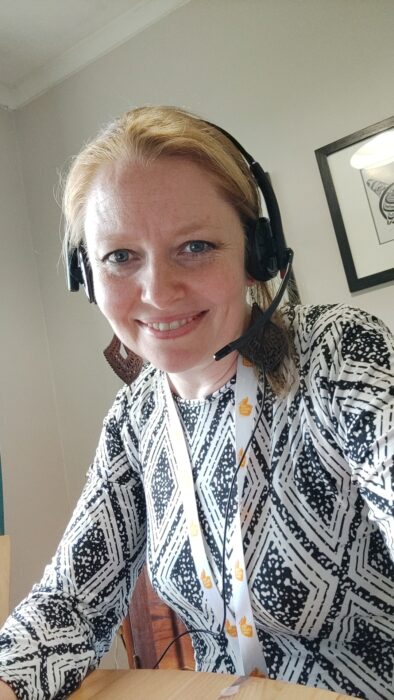
Tessa Burnard
Specialist Senior Education Psychologist

Sally Drinkwater
Trauma Informed Practice Development Facilitator
What is trauma-informed practice?
Visit our page here to find out more.